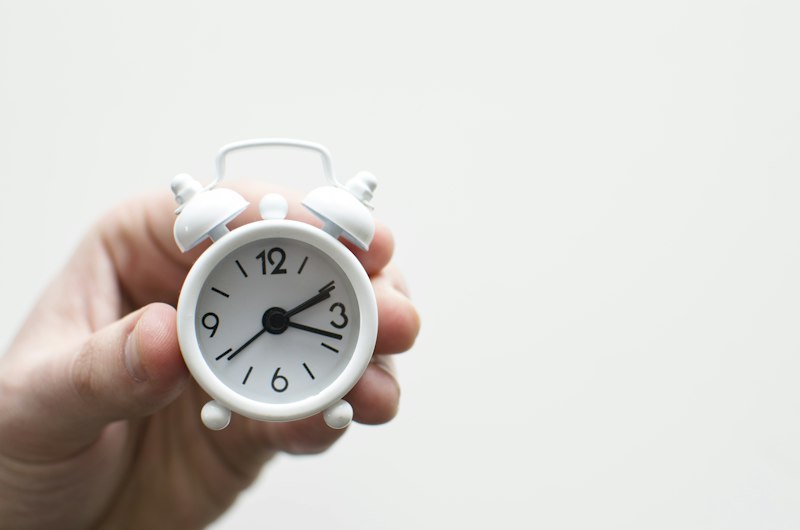
The Art of Doing One Thing at a Time
Doing one thing at a time sounds almost too simple to count as advice, yet almost nobody actually does it. Between browser tabs, notifications, and the reflex to "just quickly" check a message mid-task, most work happens in fragments instead of full attention. This is the case for treating single-tasking as a real, learnable skill, plus the specific habits that make doing one thing at a time possible in a job built around interruption.
The Real Cost of Multitasking
What feels like multitasking is almost never two things happening at once — it's rapid switching between tasks, and each switch has a cost. Researchers call this a "switch cost": every time you jump from writing an email to a coding problem and back, your brain has to reload context, and that reload takes measurable time and attention. Do it often enough across a day, and the accumulated switching cost eats a real share of otherwise productive hours, even though each individual switch feels instant.
The deeper problem is quality, not just speed. Work produced while switching between tasks tends to contain more errors and shallower thinking than work produced in one continuous block, because full attention never actually arrives on any single task — it's always half-loaded.
Why One Thing at a Time Feels So Hard Now
- Notifications are designed to interrupt. Badge counts and banners are built to pull attention immediately, not to wait for a natural pause in what you're doing.
- Open tabs function as ambient tasks. Every open tab is a small, unclosed loop your brain periodically checks on, even without an actual notification.
- "Quick checks" aren't quick. A ten-second glance at a message can cost several minutes of refocusing afterward — the glance is cheap, the recovery isn't.
- Busyness reads as productivity. Visibly juggling five things looks more like "working hard" than sitting with one task, even when the single-task approach finishes more by the end of the day.
How to Actually Do One Thing at a Time
- Close everything except the current task — not minimize, close. An open tab is a standing invitation to switch the moment things get slightly difficult.
- Write the task down before you start. A visible, specific task ("draft section 2") is harder to abandon mid-way than a vague mental intention.
- Set a single time block. Twenty-five to fifty minutes with a timer running turns "eventually" into a defined start and end.
- Put notifications on delay, not just silent. Silent still shows the badge; delay actually removes the temptation to check it.
- Let a notepad catch stray thoughts. Keep a scratch pad next to you for unrelated ideas that pop up, so you can dismiss them without losing them entirely.
A Simple Comparison: Switching vs. Single-Tasking
| Task-switching | One thing at a time | |
|---|---|---|
| Feels like | Busy, in demand | Slow, at first |
| Actual output per hour | Lower, more errors | Higher, fewer errors |
| Mental fatigue by evening | High | Moderate |
| Recovery time after an interruption | Minutes, per switch | None, if left uninterrupted |
Where Single-Tasking Doesn't Apply
Single-tasking is a tool for focused, effortful work — writing, coding, studying, real conversations — not a rule for every moment of the day. Folding laundry while listening to a podcast costs nothing, because neither task demands your full working memory. The skill is recognizing which tasks are shallow enough to combine and which ones quietly lose quality the moment attention splits. If distraction is less about tools and more about avoidance in the first place, how to stop procrastinating tackles that underlying half of the problem.
Protecting the Time to Do One Thing
None of this works without a defended block of time, which is really a boundaries problem in disguise. If colleagues or family members treat your focused hours as interruptible by default, setting boundaries at work and at home is what actually protects the block you scheduled — the technique above only works if the time exists, uninterrupted, in the first place.
The Payoff
A single uninterrupted hour reliably produces more finished, higher-quality work than two or three fragmented hours spent hopping between tasks, without the mental fatigue that comes from constant switching. You don't need new software or a system overhaul — just one closed tab, one written task, and a timer. For more on the cognitive cost of switching between tasks, see Wikipedia's overview of human multitasking. Doing one thing at a time isn't slower. It just feels that way until you count what actually got finished.